Agricultural robots can earn money in more ways than selling a machine to a farm. The business may sit in field mapping, robot rental, crop data, repairs, or specialist tools that help a machine do one job well.
If you’re weighing a robotics business in agriculture, start with the task and the buyer. A grower, equipment dealer, greenhouse operator, and food producer may need different products around the same robot.
- Field work: Robots can support planting, crop checks, weed control, harvesting, or transport.
- Service income: Farms may pay for robot time, maintenance, software, or a trained operator.
- Tool makers: A gripper, camera mount, or spray system can matter as much as the mobile base.
The business starts with one farm task
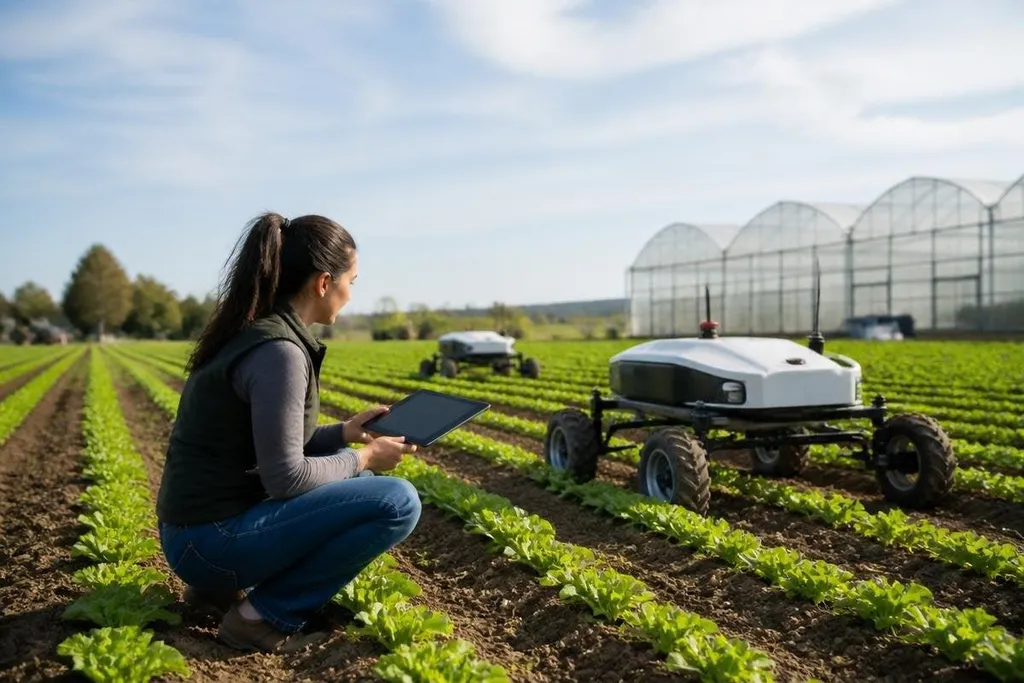
Agricultural work has many steps, but a robot usually makes sense when one step repeats in a clear space. A vehicle can carry bins through an orchard. A small arm can sort produce on a packing line. A camera system can inspect rows for weeds or plant stress.
That focus helps a company set a price around a real job. A grower may care about hectares covered, crates moved, or hours of labor reduced. A broad promise about “farm automation” gives the buyer too little to measure.
The setting changes the design. An orchard robot needs to handle uneven ground and tree trunks. A greenhouse machine needs a small turning radius and careful control near people, plants, and irrigation lines.
A field robot may need satellite positioning, machine vision, or LiDAR, which uses laser pulses to measure nearby objects.
Robot rental can lower the first cost
Many farms have seasonal work. Buying a machine that sits idle for much of the year can make the numbers hard to defend, especially when the robot also needs storage, repairs, charging, and trained staff.
A rental company can sell machine time instead. It may charge by hour, hectare, row, or harvest period. The customer gets a working service without taking on the full purchase cost, while the rental firm keeps control of maintenance and upgrades.
This model brings its own limits. A robot that works well on one farm may need new routes, tools, or safety settings on another. Travel between sites also adds loading time, transport cost, and setup work. The rental price has to cover those hours.
Data and tools create a second sale
A robot that records images or crop conditions can create a data service around its physical work. The useful product might be a map showing missed weeds, damaged plants, blocked irrigation lines, or areas that need a human check.
That service needs a clear output. A farm manager may want a task list for tomorrow’s crew, while an agronomist may need tagged images for crop records. Raw camera files alone leave too much work with the buyer.
Specialist tools offer another opening. An end effector is the part that touches the crop or object. It could be a gripper for fruit, a cutter for plants, a brush for weeds, or a sprayer for a small target area. Tool makers can sell replacements and fit the same robot base for new jobs.
An agricultural robot’s business case depends on the crop, field conditions, trial date, and staff needed after a stop. A dated report at Robot 24 can tie those details to a named machine before the next section looks at service teams that run, repair, and move robots between farms.
Service teams may be the safer bet
Farm equipment already needs local support. Agricultural robots add cameras, motors, batteries, wireless links, software, and safety systems. A company that can install, inspect, repair, and train staff may earn repeat work even when hardware prices fall.
The hard part is proving that service work saves the farm time. A technician who arrives without the right spare motor or cable can leave a machine idle during a short harvest window. Parts stock, clear fault logs, and remote checks matter because farm sites may sit far from a city.
No buyer should accept a robot plan without asking what happens after a sensor fails or a route changes. The business may work well on paper and still lose money if each visit needs a custom fix.
A practical check before starting
Use this list to test the business before building hardware:
- Name the payer: Decide whether the farm, dealer, contractor, or food producer writes the check.
- Measure the task: Pick one unit, such as hectares, crates, rows, or operating hours.
- Set the service boundary: Write down what the company handles and what the farm handles.
- Plan failure work: List spare parts, human backup, charging needs, and field support.
- Test the repeat sale: Check whether the buyer will need the service next season.
I’d start with service or a specialist tool before building a full agricultural robot. Those paths need less hardware, put the company closer to farm problems, and can show which task deserves a larger machine.
The next business opening will belong to the team that can name the crop, the task, the payer, and the cost of failure before it builds the robot.